
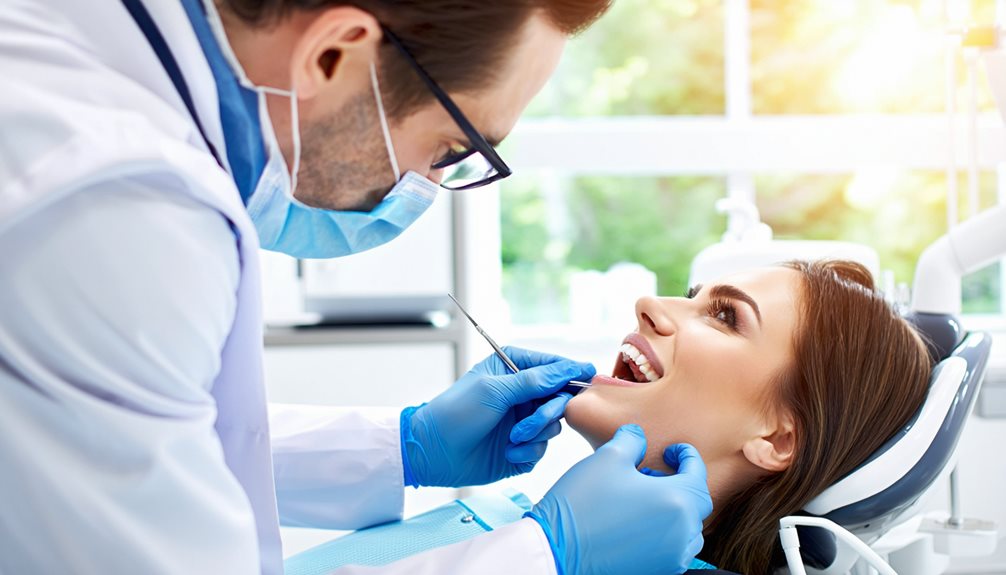
To identify top local experts for preventive teeth cleaning, thoroughly evaluate dental clinics based on qualifications and patient feedback. Begin by using online platforms to find clinics nearby, scrutinizing patient reviews and verifying their alignment with preventive care standards. Confirm dentist credentials, including accreditations and licensure through the state dental board. Review patient feedback on communication skills and the comfort offered by the clinic. Advanced technology utilization and transparent cost structures also indicate quality preventive services. Understanding these aspects aids in choosing the right provider, promising enhanced dental health. More details await for an informed decision on your dental care.
Finding Nearby Dental Clinics
Locating a dental clinic that offers preventive teeth cleaning services requires a methodical approach to guarantee both convenience and quality of care. The first step in searching dental clinics involves utilizing online platforms that provide extensive databases of local dental offices. These platforms often allow patients to filter clinics based on proximity, availability, and patient reviews, ensuring an efficient and tailored search experience.
Emphasizing technological advancements, these tools streamline the process, catering to an audience that values innovation and accessibility.
In addition to digital resources, seeking local dentist recommendations remains an invaluable strategy. Engaging with community forums, social media groups, or even consulting with family and friends can deliver personal insights into the patient experiences at various clinics. Such recommendations often highlight the standard of preventive care provided, offering a nuanced perspective that digital reviews might not capture.
Once a list of potential clinics is compiled, it is prudent to contact each office to inquire about the specifics of their preventive teeth cleaning services. This includes understanding their approach to patient care, scheduling flexibility, and any cutting-edge technology they employ.
Through this meticulous search process, patients are positioned to select dental clinics that align with their preventive care needs and expectations.
Evaluating Dentist Credentials
After identifying potential dental clinics, the next strategic step is to assess the credentials of the dentists who will provide preventive teeth cleaning services. Credential verification is vital to guarantee that the practitioner possesses the requisite qualifications and experience.
Begin by confirming the dentist’s educational background, including dental school accreditation and any additional specialized training in preventive dentistry. This step is essential as it directly correlates with the quality of care you will receive.
In addition to education, examine the dentist’s professional affiliations. Membership in esteemed organizations such as the American Dental Association (ADA) or the Academy of General Dentistry (AGD) is indicative of a commitment to ongoing education and adherence to high professional standards.
These affiliations often require dentists to stay abreast of the latest innovations and techniques in dental care, enhancing their capacity to provide superior preventive services.
Furthermore, verify the dentist’s licensure status through the state dental board. An active and unrestricted license confirms that the dentist has met all regulatory requirements and maintains ethical practice standards.
Comparing Patient Reviews
When evaluating patient reviews for preventive teeth cleaning experts, key metrics include the practitioner’s communication skills, which greatly impact patient understanding and satisfaction.
Additionally, the comfort of the office atmosphere is a critical factor, as it directly influences patient anxiety levels and overall experience.
Equally important is the ease of appointment scheduling, as it reflects the practice’s efficiency and consideration for patient convenience.
Dentist Communication Skills
Effective communication skills in dentists greatly influence patient satisfaction and outcomes, as evidenced by numerous patient reviews. The integration of effective listening and patient feedback is essential in preventive teeth cleaning services.
Patients frequently highlight the profound impact of dentists who prioritize listening to their concerns, demonstrating attentiveness and empathy. This approach not only fosters trust but also enhances the accuracy of diagnoses and the efficacy of personalized treatment plans. Through meticulous attention to individual patient narratives, dentists can innovatively tailor interventions that align with each patient’s unique dental health needs.
Patient reviews often underscore the significance of clear articulation of treatment procedures and preventive strategies. Dentists who excel in explaining complex dental concepts in accessible terms facilitate patient comprehension, empowering individuals to actively participate in their oral health management.
This participatory approach enhances adherence to recommended preventive practices, ultimately optimizing long-term dental health outcomes.
In the domain of preventive teeth cleaning, the role of patient feedback cannot be overstated. Reviews reveal that dentists who actively seek and incorporate patient input are better positioned to refine their communicative practices, thereby elevating the standard of care.
This commitment to continuous improvement exemplifies a forward-thinking approach, essential for advancing patient-centered dental care.
Office Atmosphere Comfort
A considerable number of patient reviews emphasize the importance of a comfortable office atmosphere in dental practices, particularly in the context of preventive teeth cleaning. Such an environment greatly influences patient perception and experience, fostering an atmosphere conducive to relaxation and reducing dental anxiety.
Patients frequently highlight the waiting room ambiance as a critical factor. Modern dental offices are innovating with calming color schemes, ergonomic seating, and soothing auditory elements, such as gentle music or nature sounds, to create a serene setting that eases pre-treatment stress.
Furthermore, patient relaxation techniques are progressively being integrated into the office environment. These include the provision of warm blankets, neck pillows, and aromatherapy options, which collectively promote a sense of calm and comfort.
The strategic use of technology, such as virtual reality headsets or interactive tablets, is also becoming increasingly prevalent, offering patients distraction and engagement while they await their procedures.
Patient reviews underscore the correlation between a well-considered office atmosphere and higher satisfaction rates.
By prioritizing comfort through innovative design and thoughtful amenities, dental practices not only enhance patient experiences but also foster a welcoming environment that encourages regular preventive care, ultimately contributing to better oral health outcomes.Appointment Scheduling Ease
Streamlining the appointment scheduling process is a critical factor in enhancing patient satisfaction within dental practices. In the era of digital transformation, integrating efficient online booking systems and automated appointment reminders is pivotal in attracting and retaining patients who value convenience and innovation.
Patient reviews highlight the importance of these features, underscoring how seamless scheduling contributes to overall positive experiences.
Among local experts, those who have implemented robust online booking platforms receive commendations for their user-friendly interfaces and real-time availability updates. Patients appreciate the ability to book appointments at their convenience, without the need for time-consuming phone calls.
Additionally, these platforms often offer customization, allowing patients to select preferred dentists and specific treatment options, thereby tailoring the experience to individual needs.
Moreover, automated appointment reminders via SMS or email have been identified as a critical component in minimizing missed appointments and ensuring patient compliance with preventive care schedules.
Reviews frequently mention the reliability and timeliness of these reminders as a standout feature. By leveraging such technological innovations, dental practices not only enhance operational efficiency but also foster a patient-centered approach that meets the expectations of a digitally-savvy clientele.
Exploring Service Offerings
Given the increasing significance of oral health, preventive teeth cleaning services have become a cornerstone of dental care that emphasizes both patient well-being and long-term dental health.
Dental practices are expanding their service offerings to include extensive preventive measures that guarantee ideal oral hygiene. These include meticulous scaling and polishing techniques, which remove plaque and tartar, thereby preventing periodontal disease and enhancing gum health. Additionally, many clinics now integrate teeth whitening as part of their preventive care regimen, recognizing the growing demand for aesthetic enhancement alongside health benefits.
Innovative practices use state-of-the-art ultrasonic scalers and air-polishing systems to provide more effective and comfortable cleaning experiences. These technologies not only improve the efficacy of plaque removal but also cater to patients seeking advanced care tailored to their needs.
Some clinics offer personalized periodontal maintenance programs that are designed to monitor and nurture gum health, employing diagnostic tools like digital radiography and intraoral cameras for precise assessments.
Moreover, the integration of patient education into service offerings plays an essential role. Patients are empowered with knowledge about oral hygiene techniques and the significance of routine check-ups, fostering a proactive approach to dental care that aligns with contemporary health goals.
Understanding Costs and Insurance
Maneuvering the financial aspects of preventive dental care is essential for patients seeking to maintain ideal oral health without undue economic burden. Understanding the various cost factors and the intricacies of insurance coverage can greatly impact patient decisions and satisfaction.
A thorough approach involves evaluating the costs associated with preventive teeth cleaning, which can vary based on geographical location, dental practice reputation, and the complexity of the procedure.
Insurance coverage plays a pivotal role in managing these costs. Patients should verify whether their insurance plan includes preventive services, as many providers cover two cleanings per year at minimal or no out-of-pocket expense. Innovation in dental insurance options can also offer flexible solutions tailored to individual needs.
Key considerations include:
- Plan Details: Understand the specific preventive services covered by your insurance.
- Cost Transparency: Inquire about all potential costs upfront to avoid unexpected charges.
- Benefit Maximization: Utilize insurance benefits efficiently, possibly timing cleanings to optimize coverage.
- In-Network Providers: Select providers within the insurance network to reduce costs.
- Technological Advancements: Explore practices utilizing cutting-edge technology, which may influence pricing but enhance care quality.
Navigating these elements guarantees informed decision-making and financial optimization in oral healthcare maintenance.
Scheduling Your First Visit
When scheduling your first visit for preventive teeth cleaning, it is essential to approach the process with a clear understanding of the necessary steps and considerations involved. This begins with selecting a dental practice that aligns with your health philosophies and expectations for advanced care.
Initial consultation tips include researching the practice’s credentials, technological capabilities, and patient reviews. An innovative approach to preventive care involves integration of cutting-edge tools like digital radiography and intraoral cameras, which provide enhanced diagnostic capabilities.
During your first visit, you can expect a thorough oral examination where the dentist will assess your dental history, evaluate existing restorations, and identify potential areas needing attention.
First visit expectations should encompass a detailed discussion with the dental hygienist about personalized oral hygiene techniques and potential lifestyle modifications to enhance oral health. Additionally, understanding the specific cleaning procedures, such as scaling and polishing, contributes to a more informed patient experience.
In preparation for your initial consultation, make certain you have your medical history, insurance details, and any pertinent dental records.
Frequently Asked Questions
How Often Should Preventive Teeth Cleaning Be Done?
The recommended frequency for preventive teeth cleaning, based on patient-specific needs, typically ranges from biannual to quarterly intervals. Adhering to these cleaning intervals can greatly enhance oral health by preventing plaque accumulation and promoting innovative dental care practices.
What Are the Benefits of Regular Teeth Cleaning?
Regular teeth cleaning enhances oral hygiene by removing plaque and tartar, preventing gum disease, and reducing cavities. It also contributes to teeth whitening by eliminating surface stains, promoting a healthier, aesthetically pleasing smile, and supporting innovative dental care.
Are There Any Risks Associated With Teeth Cleaning?
Teeth cleaning risks are minimal but may include dental procedure complications such as temporary tooth sensitivity, gum irritation, or bleeding. These effects are typically transient and outweighed by the benefits of maintaining ideal oral health through regular cleanings.
How Does Diet Impact Dental Health?
Diet greatly impacts dental health by influencing oral pH balance. Excessive sugar consumption fosters bacterial growth, leading to tooth decay, while frequent acidic foods intake erodes enamel, necessitating innovative preventive strategies for maintaining ideal oral hygiene and health.
Can Teeth Cleaning Help Prevent Other Health Issues?
Teeth cleaning greatly enhances oral health and can mitigate systemic health issues due to the oral-systemic connection. Regular dental cleanings reduce bacterial load, potentially lowering risks for cardiovascular diseases, diabetes complications, and other systemic conditions, promoting overall well-being.
Conclusion
In summary, selecting an appropriate dental clinic for preventive teeth cleaning necessitates a thorough evaluation of several critical factors. Proximity of clinics, dentists’ credentials, and patient reviews are essential parameters in determining suitability. Additionally, an in-depth analysis of service offerings and a clear understanding of associated costs and insurance coverage are crucial for informed decision-making. Finally, scheduling the initial visit guarantees alignment of patient expectations with the clinic’s capabilities, thereby facilitating an effective preventive dental care experience.

