
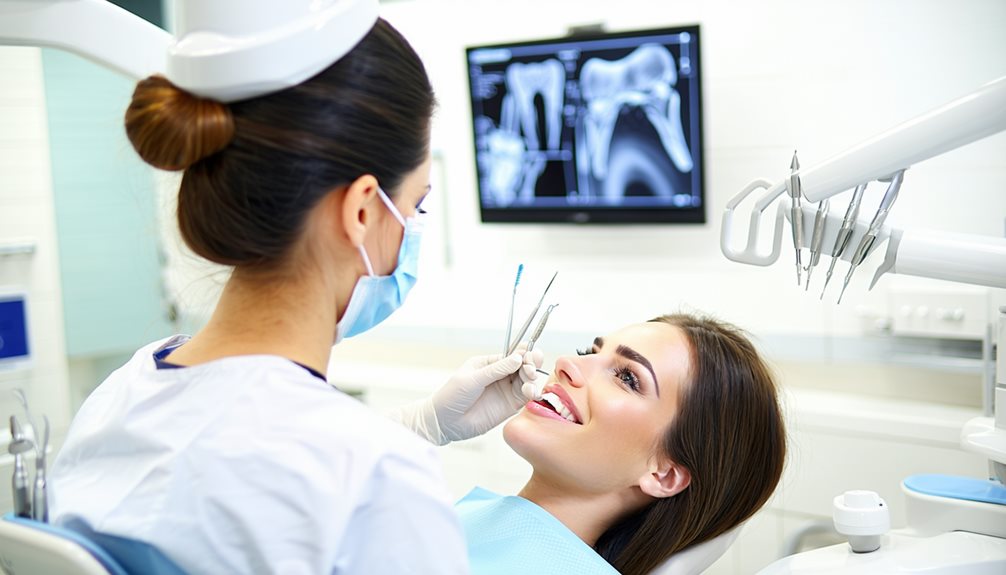
Preventive care experts for oral health include a variety of specialists who focus on maintaining ideal dental hygiene and preventing disease. General dentists act as primary caregivers by performing evaluations and offering restorative solutions. Pediatric dentists cater to children’s unique dental needs, while dental hygienists perform essential cleanings and fluoride applications. Periodontists specialize in managing gum disease, and preventive dental therapists focus on targeted proactive strategies. Oral health educators play an important role in imparting knowledge and guiding effective practices. Each professional contributes to exhaustive care plans aimed at reducing disease prevalence and enhancing oral health outcomes. For a deeper understanding, explore the roles and techniques employed by these experts.
General Dentists
General dentists serve as the primary care providers for oral health, offering a thorough range of services that are essential to maintaining ideal dental hygiene and preventing disease. With a focus on extensive oral evaluations, these professionals guarantee that dental check-ups are not merely routine but are integral to a robust preventive care strategy.
By leveraging the latest advancements in diagnostic technology, general dentists can detect early signs of dental caries, enabling timely intervention and effective cavity prevention.
The role of general dentists extends beyond mere examination. They employ cutting-edge techniques and materials to offer restorative solutions, which are vital in halting the progression of dental decay.
Through innovative approaches like digital imaging and laser diagnostics, general dentists enhance the accuracy of their assessments, ultimately leading to more effective treatment outcomes.
Moreover, general dentists play a pivotal role in educating patients on best practices for oral hygiene. They provide tailored advice on brushing techniques, flossing, and dietary choices, which collectively contribute to cavity prevention.
Pediatric Dentists
Pediatric dentists specialize in the oral health care of children from infancy through adolescence, addressing the unique challenges and needs of developing dentition. Their expertise extends beyond the treatment of dental caries and encompasses the thorough management of conditions affecting oral and craniofacial health.
They are adept at identifying early signs of dental anomalies and implementing preventive strategies tailored to each developmental stage. This includes interventions such as fluoride treatments, dental sealants, and space maintainers that are essential in pediatric dental care.
Innovation in pediatric dentistry is driven by a profound understanding of the behavioral dynamics and psychological aspects of children’s oral hygiene practices. Pediatric dentists employ advanced techniques to guarantee a positive dental experience, which is vital for fostering lifelong oral health habits.
The integration of digital radiography and laser dentistry exemplifies the cutting-edge approaches used to minimize discomfort and maximize precision during treatments.
Moreover, pediatric dentists are instrumental in educating caregivers on best practices for children’s oral hygiene, emphasizing the significance of early intervention. Their role is pivotal in mitigating potential complications arising from habits such as thumb sucking and poor dietary choices, thereby laying the foundation for ideal oral health throughout a child’s developmental trajectory.
Dental Hygienists
Dental hygienists play a critical role in oral health by providing preventive care services that are essential for maintaining overall dental hygiene.
Their expertise in techniques such as scaling, polishing, and fluoride application helps to prevent periodontal diseases and cavities, thereby reducing the incidence of more severe oral health issues.
Role in Oral Health
Dental hygienists are pivotal to the maintenance of oral health, playing a critical role in preventive dentistry. Their expertise in evaluating and identifying early signs of oral diseases is fundamental to implementing effective preventive strategies. By conducting thorough oral examinations, dental hygienists can detect anomalies and provide early interventions, thereby mitigating the progression of potential oral health issues. This proactive approach is essential in reducing the incidence of dental caries, periodontal diseases, and other oral pathologies.
In their capacity, dental hygienists utilize advanced diagnostic tools and technologies to enhance the precision of their evaluations. Their training equips them with the knowledge to interpret diagnostic data accurately and tailor individualized care plans. This innovative approach guarantees that patients receive care that is not only preventive but also personalized, addressing their unique oral health needs.
Furthermore, dental hygienists play a significant role in patient education, empowering individuals with the knowledge and skills necessary to maintain peak oral health. Through effective communication and instruction, they foster an environment where patients are encouraged to adopt preventive strategies in their daily routines.
This integration of cutting-edge techniques and patient-centered care underscores the indispensable role of dental hygienists within the domain of oral health.
Preventive Care Techniques
A multitude of preventive care techniques employed by dental hygienists are fundamental to maintaining ideal oral health. Central to these techniques are advanced flossing methods, which have evolved beyond traditional practices.
Dental hygienists advocate for the innovative use of interdental brushes and water flossers, which are particularly effective in removing plaque and food particles from hard-to-reach areas between teeth. These tools offer a dynamic approach to flossing techniques, greatly reducing the risk of periodontal disease and enhancing oral hygiene.
Moreover, the integration of mouthwash into daily oral care routines has been scientifically validated for its antimicrobial properties and its ability to deliver fluoride to teeth surfaces, fortifying enamel and preventing cavities.
Dental hygienists emphasize that selecting a mouthwash with clinically proven ingredients can considerably contribute to reducing gingivitis and providing thorough oral health benefits. The mouthwash benefits extend to maintaining fresh breath and promoting overall oral wellness, making it an indispensable element of preventive care.
Periodontists
Periodontists are specialists focused on the prevention, diagnosis, and treatment of periodontal disease and other complex oral conditions.
They employ advanced techniques to manage gum disease, including surgical and non-surgical interventions designed to restore and maintain oral health.
Their expertise is critical in preventing the progression of periodontal conditions, ensuring thorough oral care.
Gum Disease Prevention
How do oral health professionals focus on preventing gum disease, a prevalent concern affecting millions worldwide? Periodontists, specialists in gum health, employ a multifaceted approach to stave off the onset of periodontal disease. Central to their preventive strategies is the adept management of plaque control, a crucial factor in maintaining oral hygiene.
Plaque, a biofilm of bacteria, can evolve into tartar if not meticulously managed, leading to inflammation and gum deterioration. Periodontists advocate for innovative home care regimens, emphasizing the use of advanced toothbrushes and interdental cleaning tools designed to disrupt and remove plaque effectively.
These professionals also recommend antimicrobial rinses and therapeutic toothpastes to further enhance plaque control.
Education is paramount; periodontists educate their patients on the importance of regular dental check-ups and professional cleanings to monitor and maintain gum health.Furthermore, periodontists utilize cutting-edge diagnostic tools, such as digital imaging and genetic testing, to assess individual susceptibilities to gum disease. This personalized approach allows for the development of tailored preventive strategies, ensuring ideal gum health.
Advanced Oral Treatments
Building on the foundation of preventive care, the sector of advanced oral treatments offers sophisticated solutions for addressing complex periodontal issues.
Periodontists, as specialists in this field, utilize cutting-edge technologies and methodologies to manage and treat severe gum diseases, ensuring ideal oral health outcomes. Their expertise in advanced procedures provides a critical layer of intervention beyond basic dental care, targeting the intricate structures supporting teeth, including gums, bone, and connective tissues.
Advanced oral treatments encompass a range of interventions designed to restore and preserve periodontal health.
Key procedures include:
-
Guided Tissue Regeneration (GTR): This technique promotes the regrowth of bone and tissue lost due to periodontal disease, using biocompatible materials to guide natural regeneration processes.
-
Laser Therapy: An innovative approach that employs laser technology to remove diseased tissue and bacteria with precision, reducing discomfort and accelerating healing time.
-
Dental Implants: Serving as a durable solution for tooth loss, dental implants integrate with the jawbone, providing a stable foundation for artificial teeth while maintaining jawbone integrity.
Periodontists are at the forefront of these advanced oral treatments, continuously innovating to enhance patient outcomes.
Oral Health Educators
Oral health education stands as a cornerstone in the pursuit of ideal dental care, underscoring the vital role of oral health educators in the broader framework of preventive care. These professionals are pivotal in disseminating knowledge regarding oral hygiene and establishing preventive habits that are essential for maintaining peak dental health. By leveraging evidence-based strategies and cutting-edge educational techniques, oral health educators empower individuals to take proactive measures in their oral care routines, thereby reducing the risk of dental diseases.
The scope of an oral health educator’s responsibilities extends beyond mere instruction. They are tasked with developing thorough educational programs tailored to varied demographics, ensuring accessibility and relevance. Their expertise lies in translating complex dental concepts into actionable advice, fostering an environment where patients are equipped to make informed decisions about their oral health.
Moreover, oral health educators utilize innovative methodologies, such as digital learning platforms and interactive workshops, to enhance engagement and effectiveness. By staying abreast of advancements in dental research and technology, they continuously refine their educational approaches.
Ultimately, the influence of oral health educators in preventive care not only enhances individual well-being but also contributes to the overarching goal of public health improvement.
Preventive Dental Therapists
Expanding the landscape of preventive care, preventive dental therapists play a pivotal role in maintaining oral health by providing direct clinical services aimed at preventing dental diseases.
These professionals are at the forefront of implementing targeted preventive strategies and advanced therapy techniques. Their expertise guarantees that patients receive extensive care that not only addresses existing conditions but also prevents potential oral health issues from developing.
Preventive dental therapists employ a range of innovative approaches tailored to individual patient needs. Their responsibilities include:
-
Risk Assessment: Conducting thorough evaluations to identify factors contributing to dental diseases, thereby enabling personalized preventive strategies that mitigate risk factors effectively.
-
Preventive Treatments: Administering fluoride applications, sealants, and other prophylactic measures designed to strengthen enamel and protect against cavities and other decay-related issues.
-
Patient Education: Engaging patients in educational sessions that emphasize the importance of maintaining oral hygiene and adhering to recommended dental care routines to enhance long-term oral health outcomes.
Through these focused initiatives, preventive dental therapists are instrumental in reducing the prevalence of dental diseases.
Their role is a demonstration of the evolving nature of oral healthcare, where prevention is paramount, and cutting-edge therapy techniques are deployed for ideal patient outcomes.
Frequently Asked Questions
What Role Do Nutritionists Play in Preventive Oral Health Care?
Nutritionists considerably contribute to preventive oral health care by formulating dietary guidelines that promote oral hygiene. They provide evidence-based recommendations to reduce sugar intake, enhance nutrient-rich diets, and support systemic health, thereby mitigating oral health risks innovatively.
How Can Technology Aid in Preventive Oral Health Measures?
Technology enhances preventive oral health measures through telehealth consultations, offering remote expert guidance, and digital toothbrushes, which provide real-time feedback on brushing techniques, thereby promoting effective oral hygiene practices and early detection of potential dental issues.
Are There Any Apps for Tracking Oral Health Habits?
Numerous apps exist for tracking oral hygiene habits, leveraging advanced technologies to monitor brushing frequency, duration, and technique. These applications provide personalized insights, fostering improved oral care routines and promoting preventative measures for ideal dental health.
Can Stress Management Impact Oral Health Prevention?
Stress management plays an essential role in oral health prevention. Effective stress reduction techniques can enhance oral hygiene by mitigating behaviors like teeth grinding and neglecting dental care, consequently fostering a holistic approach to maintaining ideal oral health.
What Environmental Factors Affect Oral Health Prevention Strategies?
Environmental factors notably influence oral health prevention strategies. Water fluoridation effects enhance dental health by reducing decay, while poor air quality impacts can exacerbate oral diseases. Innovative approaches integrate these elements to optimize preventive care and promote population oral health.
Conclusion
Preventive care experts for oral health encompass a diverse group of professionals each playing a critical role in maintaining and promoting dental well-being. General dentists provide all-encompassing care, while pediatric dentists address the unique needs of children. Dental hygienists focus on oral hygiene and preventive measures. Periodontists specialize in gum health, and oral health educators disseminate essential information. Preventive dental therapists offer targeted preventive treatments. Together, these experts form a cohesive network dedicated to reducing oral disease prevalence and enhancing overall oral health outcomes.

